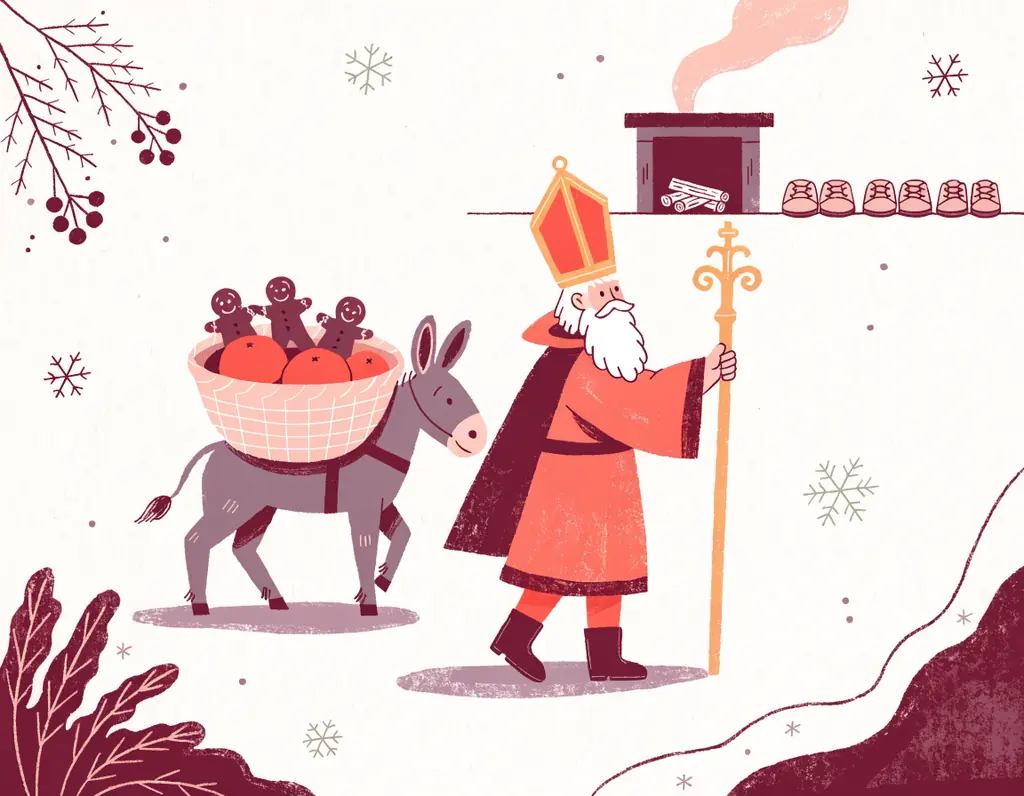



How to make a list for Santa in 5 steps
Gather your child's wishes together, choose which ones to share, then prepare a detailed list among adults to send to loved ones.
- 1. Listen to their wishes: let your child talk, draw or write their letter to Santa.
- 2. Choose together: keep their favourites, check what they already own and include several price ranges.
- 3. Create the list: name it, then choose the collaborative format if several adults manage the wishes or you are bringing siblings' lists together.
- 4. Add details for each gift: include the model, size, volume or a note, and choose the adults who manage the child's gifts.
- 5. Share with loved ones: send the link, ask everyone to reserve before buying and return to ‘Manage gifts’ to review wishes with your child.
When should you make the list for Santa?
In November, your child has time to choose his or her wishes, and the relatives have time to reserve and order without hurrying. If you celebrate Saint Nicholas, prepare it before December 6.
Here is a possible schedule to adapt to your family. Your child's wishes may change before Christmas: you can keep editing the online list, and loved ones always see the latest version.
Early November
Listen to his wishes, let him write or draw his letter.
During November
Select together the ideas to transmit, specify them, and then share the list with the loved ones.
Before 6 December
For the Saint-Nicolas, indicate the wishes planned that day.
Until mid-December
Post the letter to Santa. In 2025, children had until 20 December to write and receive a reply from La Poste before Christmas; the dates change slightly each year.
Choose wishes with your child
Start with what your child likes doing, talks about and imagines. They can draw, dictate ideas or write a letter; afterwards, choose together which wishes to share with loved ones.
Explain that the list gives some ideas: it does not promise that everything will happen at the foot of the tree. Each one will choose according to his possibilities, and there will remain room for surprises.
-
Ask about the wish: ‘What would you like to do with this gift?’ helps you understand what appeals to your child beyond a toy's name.
-
Look what he already has. : an identical game, a volume already read or a garment too small can be avoided before sharing.
-
Find their favourites: ask which ideas matter most to your child, then keep a few options at different prices.
-
Add details for loved ones: model, size, colour, volume or equipment already owned. You can also write down a wish without a shop link.
| Her wish | The detail that helps loved ones | Budget | Who is taking care of it? |
|---|---|---|---|
| A book from her series | Volume 3; she already owns volumes 1 and 2. | 15 € | Her grandmother reserves before buying. |
| A costume | Astronaut, size 8 years; check the size of the model. | 25 € | Her godfather chooses the specified model. |
| Drawing Material | Watercolour pencils; she already has a sketchbook. | 20 € | Her aunt reserves this wish. |
| An outing together | A cinema trip with her grandfather, on a date to be agreed. | 30 € | Her grandfather organises the outing. |
The rule of the 4 gifts, a pointer to sort
The 4-gift rule suggests four kinds of wishes: something the child wants, something they need, something to wear and something to read. You can use it to vary the ideas without making it compulsory.
One category may stay empty while another contains several wishes. What matters most is keeping ideas that suit your child and that loved ones can understand.
Some families use a 5-gift rule: the same categories plus a fifth, which may be time together (an outing or activity) or a surprise.
| Benchmark | A question to ask together |
|---|---|
| What he wants | ‘What would you like to play or create with?’ |
| What he needs | "What do you miss for an activity you love?" |
| Something to wear | ‘Is there an item of clothing or a costume you would like?’ |
| Something to read | "What story would you like to discover or continue?" |
From his letter to Santa Claus to the list for the relatives
The letter is his moment: he writes, draws or dictates his dreams. The shared list then serves adults to organize the gifts. You can keep the letter as he imagined and only convey the ideas taken together.
To start on paper, choose a letter on our template page and then take out the pencils. The same designs are suitable for children who write, draw or dictate their wishes.
Then copy the chosen ideas into the child's online list and add the useful details. The letter and list stay separate: nothing transfers automatically between them.


Another free letter, from En Cavale
Éditions En Cavale, a Lyon publisher of mystery games for children, offer “Ma fabuleuse lettre au Père Noël”: first name, secret agent name, a short note and ten lines for wishes.
The template arrives free as a PDF by email, with Santa’s address for posting it.
Two parents, several children: who manages the wishes?
In a collaborative list, each child can have his or her own gifts under one family link. Indicate that, he or she "does not manage his or her own list" and choose adults who can add, modify or withdraw his or her wishes with "Manage Gifts".
Choose ‘Collaborative list’ when creating the list, then select this setting when adding the child as a member or in member management. At least one person on the list must manage their own list.
Both parents may participate
Several adults can manage the gifts of the same child. Each adds the wishes collected with him; check the details together before sharing the list.
One list per child, one link for all the siblings
The family members find each child's wishes in the same place. If two children want the same object, specify whether it is, a gift for each child or a gift to share.
Time for ideas still in the process of reflection
Not sure about a wish yet? Tick ‘Gift under consideration’: it stays visible to the parents managing the list and hidden from loved ones while you decide.
Go through wishes together without revealing the gifts
To go through the list with your child, use the ‘Manage gifts’ screen: reservations stay hidden there by default. The loved ones' view shows them so people can coordinate; only consult that view among adults.
From their own profiles, parents can see what is already reserved for the child and reserve the gifts they will give. Return to the child's gift management screen before showing the child their wishes.
A member of the collaborative list can also add a "surprise gift" for the child: the other relatives see it, but it does not appear in the "Manage Gifts" screen. On a simple list, the "View Reservations" button also reveals the choices of the loved ones.
Give loved ones the details they need to choose
Send the link with a small word: these are ideas, each chooses according to its budget and reserve before buying. Grandparents, godfathers and godmothers open the list in their browser and indicate their first name, without account or application to install.
-
Keep details in one place: if the size, volume or model changes, edit the gift's note instead of sending several versions by message.
-
Help someone who prefers to phone: a family member can reserve on their behalf, using their first name.
-
Plan a group gift: a gift fund on the item lets everyone record their contribution. Money is arranged between you; no payments go through Listopia.
Baby's first Christmas: start with what you already have
For a baby, parents choose the ideas to pass on. Start by checking what was already given at birth, what is useful every day and what you would like to keep as a memento of this first Christmas.
Note the desired clothing size, books already at home and equipment you own. For each toy you are considering, check the manufacturer's stated age range.
If you have a baby registry, keep only ideas that are still useful and have not been given. For a gift to give together, loved ones can coordinate a group present.
Saint Nicholas Day and Christmas: keep the two celebrations separate
If your family celebrates Saint Nicholas on December 6 and Christmas, specify what party each wish is planned for. This helps family members choose and avoids that a gift already offered on the 6 will be bought again for Christmas.
If the same loved ones give gifts for both celebrations, one list is enough: write ‘for Saint Nicholas Day’ on the relevant gifts. If different people are giving gifts, a separate list in the child's name may be easier to follow.
After 6 December, go through the wishes with your child and remove gifts already received before sharing the Christmas list. On paper, an open-ended letter lets them write to Saint Nicholas in their own words.